Storage Field Day 6 – Day 1 – StorMagic

Disclaimer: I recently attended Storage Field Day 6.  My flights, accommodation and other expenses were paid for by Tech Field Day and their sponsors. There is no requirement for me to blog about any of the content presented and I am not compensated in any way for my time at the event.  Some materials presented were discussed under NDA and don’t form part of my blog posts, but could influence future discussions.

For each of the presentations I attended at SFD6, there are a few things I want to include in the post. Firstly, you can see video footage of the StorMagic presentation here. You can also download my raw notes from the presentation here. Finally, here’s a link to the StorMagic website that covers some of what they presented.


StorMagic know their limitations, and are really looking to address storage problems at the edge. The “Distributed enterprise” is:

  • Virtualising remote infrastructure;
  • Introducing new remote services;
  • Systems in harsh environments;
  • Operating without local IT;
  • Seeking to reduce support costs; and
  • Experiencing downtime of critical, remote applications.

They ‘ve found that the average remote site has:

  • 2TB average data capacity;
  • 7 or 8 key applications;
  • separation of servers on site;
  • no computer room; and a
  • set and forget mentality.

What these businesses need is

  • High Availability;
  • Centralised Management;
  • A Small IT footprint; and
  • Simple, automated deployment.

Traditional storage does not fit at the remote site. Adding a traditional SAN in these environments leads to:

  • A single point of failure;
  • Complexity;
  • Specialist staff;
  • Depreciating value;
  • High capex and opex; and
  • Tied in to hardware vendor.

StorMagic have basically taken this on board in the design of their SvSAN product, and also claim to get around a number of the current limitations of VMware Virtual SAN. In a nutshell, SvSAN is a VSA that:

  • Uses shared storage (internal or DAS);
  • Provides synchronous mirroring between nodes;
  • Runs as VSA independent of storage hardware;
  • Provides HA – withstands server or storage failure; and is
  • Scalable – 2 nodes to many nodes.

The StorMagic guys were asked whether their focus on beating VMware Virtual SAN at the smaller end of the market was a mistake. They seemed to think that, moving forward, VMware would be a lot more interested in the mid- to high-end of the market, leaving them to play in the two-node, edge storage scenarios. It seems like a solid strategy, and it seems like a solid bit of technology. I recommend looking at them if you have this kind of use case come up.

Storage Field Day 6 – Day 2 – Pure Storage

Disclaimer: I recently attended Storage Field Day 6.  My flights, accommodation and other expenses were paid for by Tech Field Day and their sponsors. There is no requirement for me to blog about any of the content presented and I am not compensated in any way for my time at the event.  Some materials presented were discussed under NDA and don’t form part of my blog posts, but could influence future discussions.

For each of the presentations I attended at SFD6, there are a few things I want to include in the post. Firstly, you can see video footage of the Pure Storage presentation here. You can also download my raw notes from the presentation here. Finally, here’s a link to the Pure Storage website that covers some of what they presented.

SFD6_PureStorage

If you’ve watched any of the Storage Field Day sessions from this year or previous events, you’ll know that the delegates and vendors tend to like to go into technical deep dives on a pretty regular basis. While this also happened with Pure Storage it was refreshing, in my mind at least, to also cover some of the issues that customers are faced with from a business perspective. Pure Storage are keen to make sure that we’re asking the right questions when evaluating the requirements for an all-flash array (AFA) solution. To wit, these are the wrong areas to focus on:

  • Can my array do one meeellion IOPS?
  • Architecture swordplay;
  • Raw price per gigabyte; and
  • How do I adjust the Tiering? RAID? Caching? Disk layout? etc.

Instead, you’re much better off looking at:

  • How does the app perform?
  • What is the usable storage cost for my applications?
  • How simple is this for my admins, DBAs, etc?
  • How do I scale capacity and performance?

I thought Vaughn Stewart did a bang up job of covering off these questions, as well as talking about Pure Storage’s mantra of simplicity.

  • How simple is this for my storage admin?
  • Is storage invisible for my application owner?

There’s no more need for application alignment, it’s invisible. There’s no more need for storage tuning, it’s all about keeping it simple. And automated …

Operate & Automate with:

  • Web-based GUI;
  • CLI; and
  • RESTful API.

And integrated with your favourite stack. There’s support for:

  • OpenStack;
  • VMware VAAI;
  • vCenter plugin;
  • Log Insight plugin; and
  • MSFT’s VSS Provider.

We also need to understand vendor performance claims versus real world requirements. Pure have been looking at a bunch of data and are seeing that the average IO size is 40.6K. As Vaughn said during the session, we need to get out of the “4K Vanity Zone” favoured by vendors when it comes to published benchmark data. What it comes down to is knowing the I/O size of the application you’re running? There’s nothing earth-shattering in this approach, but it’s something we seem to get distracted from at times.

And, I have to say, as much as I enjoy hearing about how storage works in its various incantations, and whether providers dedupe or compress first, and what happens to the data after it hits write cache, sometimes my customers just don’t care about that. And all the technical presentations in the world won’t get them to think otherwise. While I’m not saying you need to forget all about the tech and how it works, sometimes it really is important to keep it simple. I think the Pure Storage message does a pretty good job of that.

Storage Field Day 6 – Day 1 – Avere

Disclaimer: I recently attended Storage Field Day 6.  My flights, accommodation and other expenses were paid for by Tech Field Day and their sponsors. There is no requirement for me to blog about any of the content presented and I am not compensated in any way for my time at the event.  Some materials presented were discussed under NDA and don’t form part of my blog posts, but could influence future discussions.

For each of the presentations I attended at SFD6, there are a few things I want to include in the post. Firstly, you can see video footage of the Avere presentation here. You can also download my raw notes from the presentation here. Finally, here’s a link to the Avere website that covers some of what they presented.

Avere’s stated goal is to “[r]einvent storage with a Hybrid Cloud NAS solution that integrates public and private object storage with legacy NAS into a single, cost-effective pool with scalable performance for users everywhere”. I haven’t had a lot to do with Avere previously, and I’m generally less than enthusiastic about systems that add another layer of abstraction to storage infrastructure. However, one of the cooler use cases for Avere is the support for EC2 compute with on-premises storage access. I have a bunch of clients that are keen as beans to access cloud compute for certain workloads but are restricted by what data they can have in the cloud.

Avere_cloud_nas_table

Avere also recently made some announcements about their virtual FXT Edge Filer which I think is going to open things up for them in this space. Check out Eric’s post for an interesting perspective on Avere’s offering. Also, have a look at this blog post from Gretchen Weaver on what cloud NAS is. Thanks to Avere for taking the time to shed some light on their products.

Storage Field Day 6 – Day 0

Disclaimer: I recently attended Storage Field Day 6.  My flights, accommodation and other expenses were paid for by Tech Field Day and their sponsors. There is no requirement for me to blog about any of the content presented and I am not compensated in any way for my time at the event.  Some materials presented were discussed under NDA and don’t form part of my blog posts, but could influence future discussions.

This is just a quick post to express my enthusiasm thus far and share a few pictures and thoughts before I crash into bed from jet lag. I’ve just come back from dinner with my fellow delegates (check them out on the SFD6 site) and Tom, Claire and Stephen. I’ve had a great time so far (looking really tired notwithstanding – sorry Stephen) and am really excited about the next few days of activities. Mostly though, I’m excited to be a part of this event and have the opportunity to have interesting conversations about cool stuff with a bunch of really switched on people from all over the place. In the next few days / weeks I’ll be sharing some of what we’re doing and some thoughts on what I’ve heard. But for the moment, I just wanted to thank Stephen, Claire and Tom for having me over, making sure everything is running according to plan and for just being terribly nice people. Enough gushing, here are some pictures.

Firstly, the requisite passport photo, on my way to about 15 hours of flights.

IMG_9496


Followed up with a shot out the window on my flight from BNE to SYD. While I flew United from SYD to SFO, I didn’t take the opportunity to take a shot of the “Friendly Skies”, so the Aussie ones will have to do for now.


IMG_9494


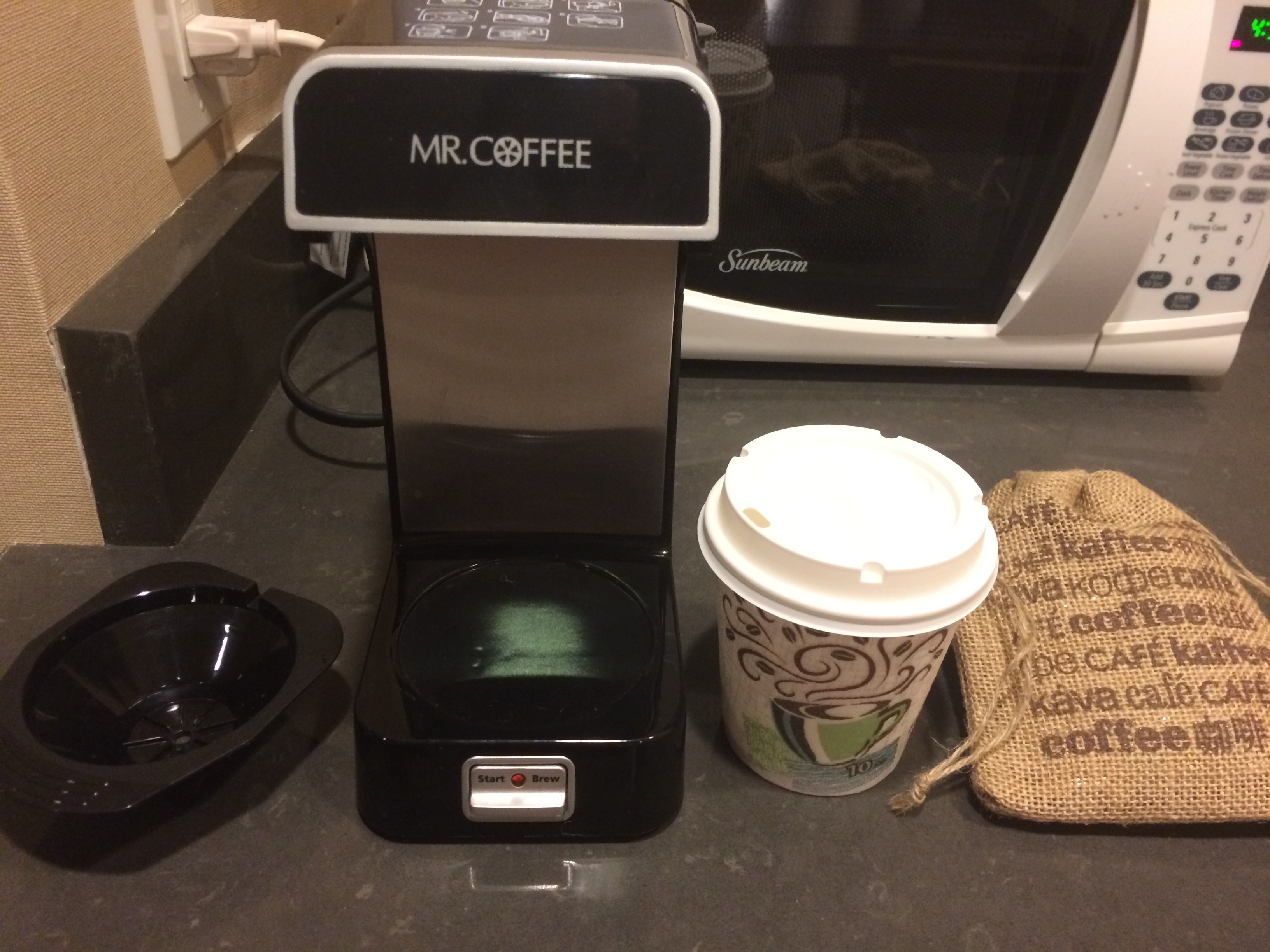
And I’m starting to get used to these things in my American hotel rooms. Although I still don’t understand why they think sweetener and creamer are appropriate substitutions for milk and sugar. Black it is then.


IMG_9511


I’ll have some more technical and thinky posts over the next few days.

Storage Field Day – I’ll be at SFD6

If you haven’t heard of the very excellent Tech Field Day, head on over and check it out. They do all kinds of Field Days, including one for storage. Number 6 is happening in less than 2 weeks and, yes, I’ll be there this time. Wheee! Look, you can see my picture on the internet and everything. So while it’s exciting for me that I’ll get a chance to cross time zones and hob-nob with some really smart people for a few days, it’s also worth checking back on the SFD6 website during the event as there’ll likely be video streaming and such.

I’d also like to publicly thank in advance the nice folk (Stephen, Claire and Tom) who’ve seen fit to give in to my pleas for a ticket. Also thanks to the sponsors (more about them later). In any case, I’ll be posting a tonne of stuff in the next little while, and hopefully some of it will be technically useful and not just zany anecdotes about how much food they serve in L’America.